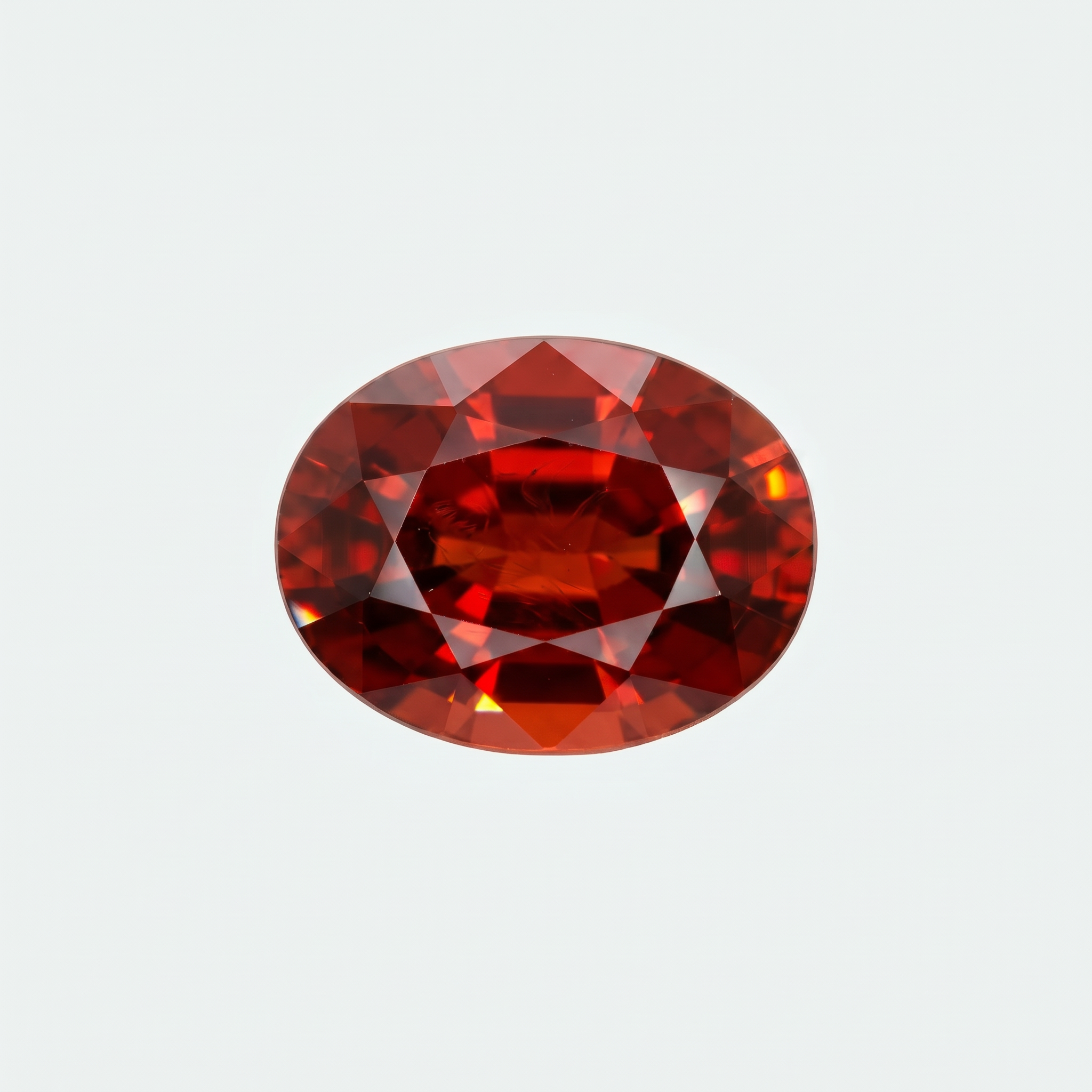
Garnet
buying guide
A working guide to the garnet family: the species and their colors, the green premium, why none of it is treated, and what garnet actually costs.

Garnet is not one gemstone but a whole mineral family, from the deep reds everyone pictures to oranges, a chrome green that rivals emerald, and a few that change color. They share a name and a structure, and almost nothing else in price.
The reds are among the best values in fine gems. The greens, tsavorite and demantoid, are among the rarest colored stones on earth. This guide names the species worth knowing, explains why garnet is the honest gemstone of the trade, and shows where the value sits from a forty dollar everyday stone to a five figure green.
If you remember one thing: every natural garnet is untreated. No heat, no oil, no irradiation. The color you see is exactly what the ground made.
The reds and orangesalmandine, pyrope, rhodolite, spessartite
The reds are where garnet earns its reputation as a value. Almandine and pyrope give the classic deep red, often blended in nature, and rhodolite is the lively raspberry to grape blend that has become the modern favorite. All of it is bright, hard enough for daily wear, and priced far below what the color suggests.
Spessartite is the orange member, from honeyed mandarin to a pure traffic cone orange that the Kunene find on the Namibian border made famous. The best holds its color in low light, where lesser orange stones go muddy.
Grape garnet, a purple red blend, and hessonite, the cinnamon to honey grossular, round out the warm end. Then there are the color change garnets, which shift from blue green in daylight to red under lamplight, the same trick alexandrite plays for far more money.
Across the reds and oranges, garnet is bright, abundant, and untreated, which makes it one of the few places in fine gems where a large clean stone in a glorious color is genuinely affordable.
The green garnetstsavorite and demantoid, the rare ones
Tsavorite is a chrome green grossular, the green of fine emerald with none of emerald’s fragility or oil. It was found in the 1960s on the Kenya Tanzania border and named for Tsavo, and clean tsavorite over two carats is rare and climbing.
Demantoid is the other green, an andradite garnet with more fire than diamond, prized by collectors for the horsetail inclusions that mark the finest Russian material. Demantoid is small, brilliant, and expensive, the connoisseur’s garnet.
These two are nothing like the affordable reds. Fine tsavorite and demantoid sit among the rarest colored gemstones on earth, and they are the reason a garnet guide has to talk about both forty dollar stones and five figure ones in the same breath.
Why garnet is never treatedthe one gemstone you can trust on sight
Here is the quiet superpower of the whole family: garnet is never treated. There is no routine heating as with sapphire, no oiling as with emerald, no irradiation as with some tourmaline. What comes out of the ground is what you set.
That makes garnet the one fine gemstone you can largely trust on sight. The color is natural, the clarity is natural, and a lab report confirms species and origin rather than disclosing a treatment. It is an honest stone in a trade full of asterisks.
Durability is friendly too. The family runs 6.5 to 7.5 on the Mohs scale, hard enough for rings and daily wear, with demantoid the softest and best kept to earrings and pendants.
The reds are among the best values in fine gems. The greens are among the rarest.
Why one family spans forty dollars to five figures
Where garnet comes fromAfrica, Brazil, and the historic deposits
Africa leads the modern supply across the family, from Tanzanian and Mozambican rhodolite to Namibian and Nigerian spessartite to the Kenyan and Tanzanian tsavorite belt.
Brazil and Sri Lanka carry the historic claim, and the Ural Mountains of Russia still set the standard for collector demantoid. Madagascar and the wider world fill in the reds.
Origin matters most at the green end, where Russian demantoid and fine tsavorite command a premium. Across the reds, you are buying the individual stone and its color, not the map.
Reading value across the familyfrom everyday red to five figure green
Here is how to spend across the widest value range in any gem family. At the everyday end, a clean bright rhodolite or spessartite in a generous size costs less than almost any comparable fine gem, and asks nothing in care.
In the middle sit the larger reds and oranges and the entry greens, where color and size start to compound. At the top, tsavorite and demantoid are real rarities, priced and collected like the scarce stones they are.
The move is to decide which garnet you actually want, a value red, a vivid orange, a color change curiosity, or a rare green, because the family spans two worlds and the right one depends entirely on that choice.
For the chrome green at a different price and character, see emerald, or read our grading guide for how color and cut translate into value across every gemstone we carry.
Drawn from our live collection of more than 300 garnets across the family at the time of writing. The reds and oranges cluster under $600, while fine tsavorite and demantoid run far higher. Each species has its own page.
The family, made shoppablelive garnet from every species
Garnet is split across separate species, so shop it two ways. Browse by type — Rhodolite · Spessartite · Tsavorite · Grape · Demantoid · Classic Reds · Color Change · Hessonite — or scan the price tiers below, each pulling live stones from across the whole family.
Every card opens right here to buy or start a custom design. Prefer to pick a species? Use the links above, or browse the full shop.
Tell us which garnet you meanand we will pull the species
Tell us whether you want a value red, a vivid orange, a color change curiosity, or a rare green, plus a size and budget. We will pull a tray from the right species and send video in daylight.
Browse All Garnet

Leave a Reply